BEA reports 3Q2016 GDP growth is highest in 2 years.
From the shadows cast by the Presidential Election earlier this month, the Bureau of Economic Analysis (BEA) released a big “surprise” during the end of October. However, coverage of this news was relegated to the back page due to the election. That news was reporting that the first estimate of third quarter GDP growth came in at an annualized rate of 2.9%, the highest reading in two years (full report). Following the election, stock markets rallied to set new all-time highs and interest rates spiked considerably, with the 10-year treasury moving from 1.82% to 2.32%, a 27% increase. While much of the election’s impact on markets has since been discussed, the underlying status of potential growth (irrespective of the outcome of the election) is probably the bigger story.
While first estimates by the BEA are notoriously prone to error and likely to be revised, quarterly financial results of many publicly traded companies seem to be equally aligned as are recent readings of consumer health and sentiment. So for the time being, the market expects the US economy to grow at a more robust pace than the “slow” sub 2% expectations held just a month ago. For commercial real estate investors this is not new news. Rents and occupancies have been growing for years, but the reality of operating in a rising interest rate environment is a new phenomenon. Assuming the present situation holds, it is rational to expect treasury rates and bank lending rates to drift upwards, occasionally in big steps for much of 2017. This should not cause any great calamity, but upward movements in cap rates should be expected in some markets and asset classes. Losses from cap rate reversion will be offset, at least partially, by continued growth in net operating incomes. However, this is more of a long term effect.
Recent third quarter results from multiple real estate data providers, including REIS, CoStar, and NCREIF, were all positive with some slowing in the rate of appreciation and rental rate growth. If these growth expectations hold, it is quite possible for 2017, and even possibly in 4th fourth quarter 2016, to show that we will experience much faster growth. There is some evidence that the election and its uncertainty was holding back economic growth in 2016 more than previously thought. With this uncertainty gone, and with initial first impressions that a Trump presidency will be pro-growth, it is possible that pent up demand may be released. Still, the transition will not be complete until January, and even then it will take time to see what policy changes and enactments will actually transpire. Thus, cautious optimism is all that can be warranted today. Currently, the stock markets are firmly in this mindset, with growth expectations overpowering fear.
The specific impact by the Trump administration on commercial real estate remains to be seen. Infrastructure spending, tax cuts, and regulatory roll backs all portend signify positive results. Of course, an unpredicted increase in inflation and higher interest rates could mollify these impacts if too unbalanced. Although rents have paced ahead of overall inflation for the past several years, by nature, this trend should reverse itself over time. So celebrate the New Year as most expectations looks positive for the near future following the election, but be wary of too much of a good thing.


 Many of you are reading this and thinking that this isn’t a challenge. After all, you talk to 10, 20, 30 people every day, right? As I write this, it isn’t even


 Here’s how SVN can address the Independent vs. National Firm concern, from the words of various members of the SVN community:




 advisor who may lack in years in the business, but does not lack in tools, resources and initiative. Note that in commercial real estate, the term “junior” doesn’t necessarily refer to the age of the broker or advisor, but more likely the years in the industry. Many of our own top SVN advisors already had successful careers in completely different industries. Why work with a less experienced advisor? First of all, most established firms are relatively selective about who they recruit, so the odds are that you’ll get someone pretty good. Second of all, that advisor should be desperate to do a good job so that they can build their resume. They will give your deal much more attention than a more experienced advisor will. (We note this also works when selecting attorneys!)

 plan to sell, it is best to sell with ten years left or a minimum of five years. If you have less than five years remaining, you may need to hold until the renewal or be prepared to take a significant discount. It’s important to have a plan in place when you purchase a NNN investment as to how long you will hold and when to exit the investment. A real estate investment professional can help you evaluate the best time to dispose of an investment in light of the market conditions.
 One of the mistakes I often see both new and seasoned investors make is to not properly define their investment parameters before getting started. This is important because it sets the course for the strategy and allows you to execute the plan more efficiently; and ultimately be more successful, because you have a baseline to which you can compare your investment portfolio.
 Once you have defined investment parameters, the next step is to educate yourself. You need to study your respective market, in the particular product type niche or niches you have chosen. Research sale comparables and what properties are on the market for sale. This is where teaming with a trusted real estate advisor, like those at a Sperry Van Ness office, can greatly enhance the success of implementing your strategy. Picking a great commercial real estate advisor who specializes in the niche product type is critical to being able to quickly get up to speed and accomplish your goals (see our other post “
 Every commercial real estate deal needs to have an exit strategy. It’s important to think about this exit strategy early on; in fact, before the purchase is even made. Granted there will be times when the exit strategy will change, due to rising or falling market conditions, or supply and demand, and you will have to adjust your exit strategy. The main point here is that an exit strategy needs to contemplated in the beginning, not the end of a commercial real estate transaction. If you buy an office building at an 8% cap rate that is 70% occupied and your plan is to spruce it up, apply aggressive leasing tactics with a CRE advisor, and increase the revenues, only to find out later that the market for those types of investments are trading at 8.75% cap rates, due to the smaller tertiary market the property is in and the smaller, shorter term leases, then your exit strategy is flawed because the market will not pay you for the work you have done. Of course, this is a simplified example. The point is, have a defined strategy to exit the investment at the proper time, and always be willing and able to review your exit strategy and make adjustments. In the words of a favorite Kenny Rogers song, sometimes “you got to know when to hold ‘em and know when to fold ‘em, know when to walk away, know when to run!” Hope is NOT an exit strategy.
 About Carlton Dean – Carlton has nearly 20 years of experience in the commercial real estate industry, with a special focus in the retail and multifamily sectors. Carlton is based in Tallahassee, Florida, but serves clients throughout the entire Southeastern US.

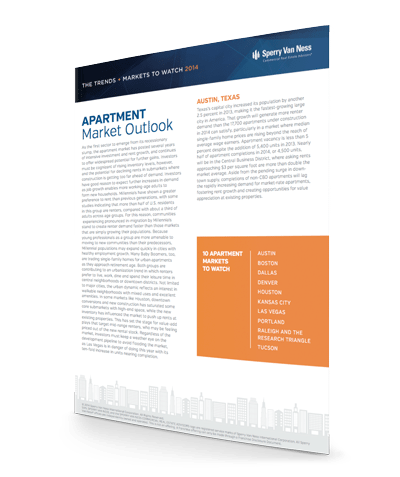
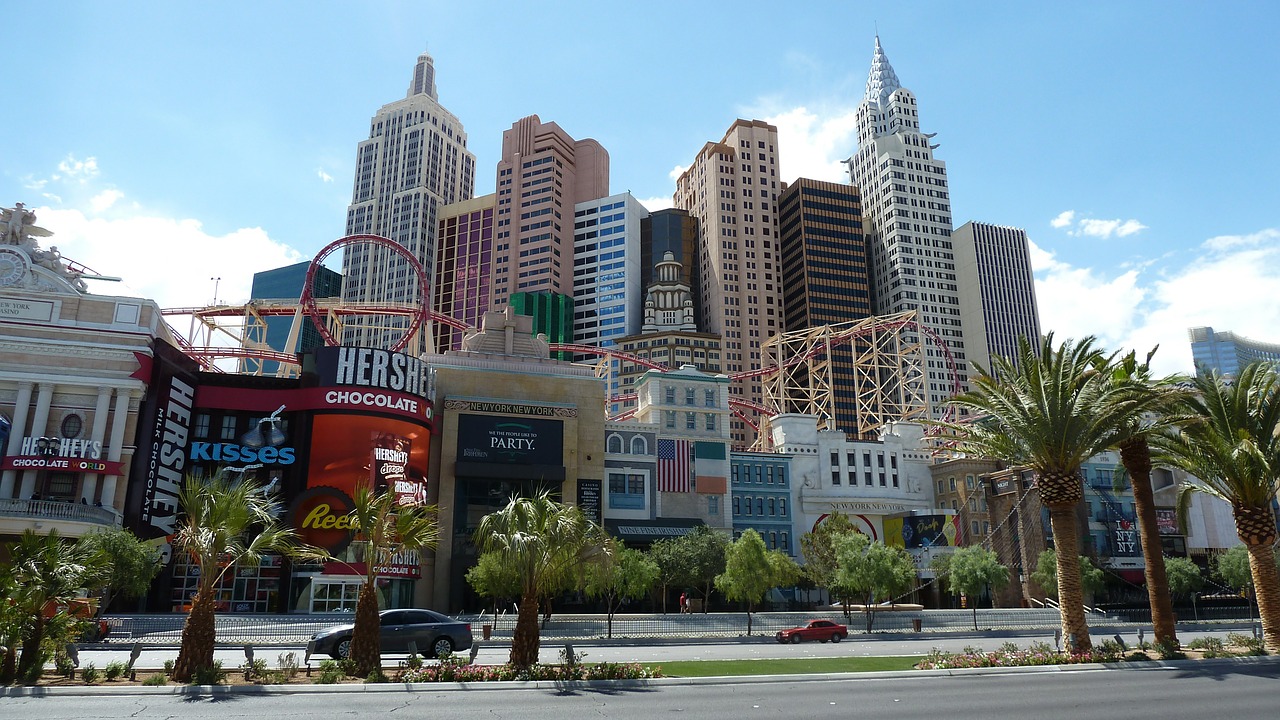

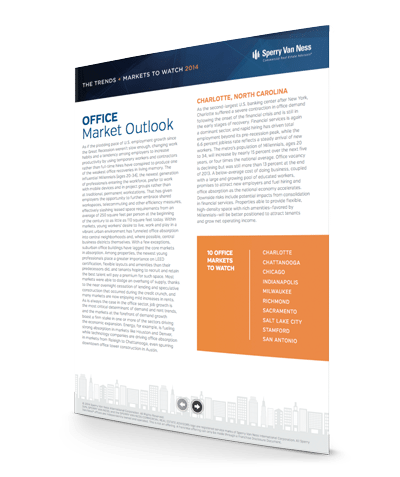






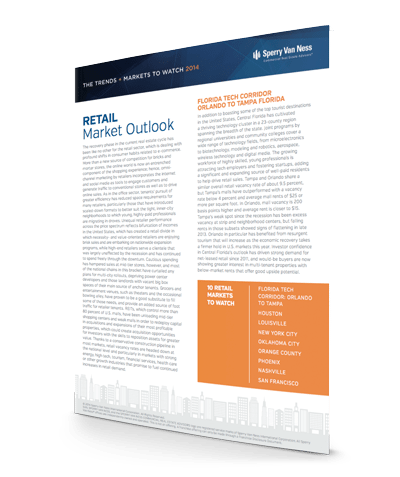







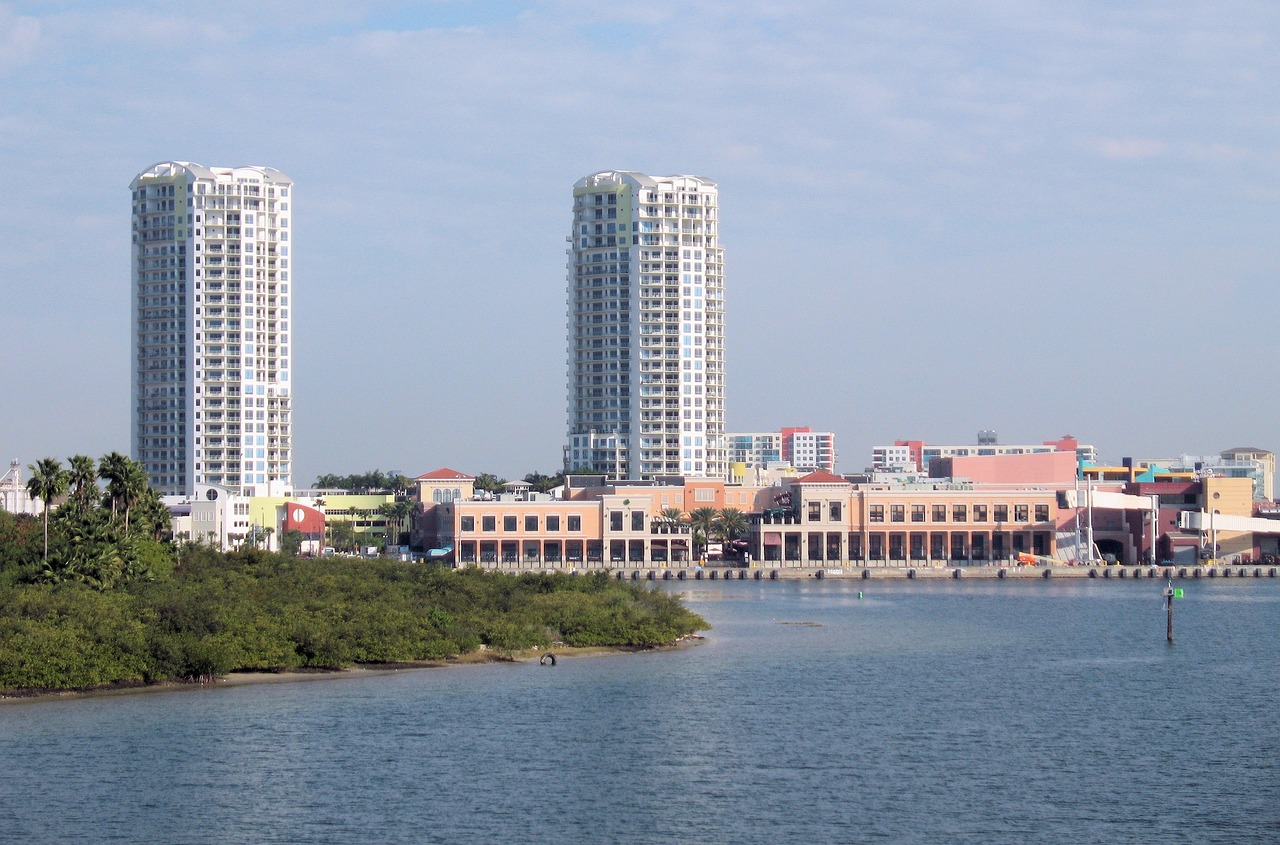
 In addition to boasting some of the top tourist destinations in the United States, Central Florida has cultivated a thriving technology cluster in a 23-county region spanning the breadth of the state. Joint programs by regional universities and community colleges cover a wide range of technology fields, from microelectronics to biotechnology, modeling and robotics, aerospace, wireless technology and digital media. The growing workforce of highly skilled, young professionals is attracting tech employers and fostering startups, adding a significant and expanding source of well-paid residents to help drive retail sales. Tampa and Orlando share a similar overall retail vacancy rate of about 9.5 percent, but Tampa’s malls have outperformed with a vacancy rate below 4 percent and average mall rents of $25 or more per square foot. In Orlando, mall vacancy is 200 basis points higher and average rent is closer to $15. Tampa’s weak spot since the recession has been excess vacancy at strip and neighborhood centers, but falling rents in those subsets showed signs of flattening in late 2013. Orlando in particular has benefited from resurgent tourism that will increase as the economic recovery takes a firmer hold in U.S. markets this year. Investor confidence in Central Florida’s outlook has driven strong demand for net-leased retail since 2011, and would-be buyers are now showing greater interest in multi-tenant properties with below-market rents that offer good upside potential.

 SVN Auction Services, a provider of date-specific sales and special asset solutions, has launched its popular and highly anticipated
  This year’s SVN Q4 event includes a wide variety of quality office, industrial, retail, land, hotels, multifamily, and NNN properties, including a historic hotel in Hot Springs, Arkansas, a fruit packing facility in Orange Cove, California, a former FedEx headquarters campus in Memphis, Tennessee, and a church and school in Oklahoma City, Oklahoma. Assets feature a $500,000 minimum value, up to a value range of $14,000,000.


 Let’s start this with a two question quiz:
 Social media matters in commercial real estate in much the same way email and telephones matter. It’s a form of communication. Whether you use it or not, doesn’t stop others from doing so, which means you might be left out of some of the conversation. This may matter more or less, depending on where you are in your career.








 Nearly 2 percent annual population growth and a diverse employment base are propelling San Antonio’s economy at a healthy clip, but the market lags the performance and rising profile of the other major Texas metros of Houston, Dallas/Fort Worth and Austin. San Antonio’s longstanding strength in the military and aerospace sectors, coupled with close proximity to Austin’s high tech cluster, has fostered an important cyber security sub sector. Located less than an hour’s drive south of Austin, the Alamo City has also captured a large piece of the Eagle Ford Shale energy boom emanating from South Texas, while its business-friendly climate, thriving tourism and manufacturing jobs attract new residents and fuel home sales. Office tenants were still giving back space in 2012 but absorption turned positive here in 2013. Delivery of several new office projects slowed rent growth and pushed the office vacancy rate into the middle teens last year without softening conditions enough to hamper rental rate growth. More construction is likely to begin in 2014. For investors who missed the opportunity to acquire office assets in Houston, Dallas or Austin at the bottom of the market cycle, San Antonio offers acquisition and development opportunities in a market that is in the early stages of appreciation.