

Healthcare commercial real estate has long been considered a defensive asset class as it’s reliable, demand-driven, and relatively insulated from economic cycles. In 2026, that reputation is being reinforced by a convergence of demographic pressure, supply constraints, and a fundamental shift in how and where medical care is delivered. For investors paying attention to the data, the opportunity is difficult to ignore.
Below, SVN® International walks you through what is driving this healthcare CRE trend and specifically the role ambulatory surgery centers play in the opportunities presented.
A Sector Built on Durable Fundamentals
The medical outpatient building (MOB) market enters 2026 with occupancy near decade-high levels, sitting at approximately 93% nationally. In many Sun Belt and high-growth markets, that figure climbs above 95%. Tenant retention has reached nearly 89% annually, which makes sense when you consider how costly and disruptive it is for a clinical practice to pick up and move.
The supply side tells an equally compelling story. New MOB construction completions are projected to fall another 26% in 2026, reaching the lowest level in over a decade. Qualified tenants are competing for a shrinking pool of available space, and rents are responding accordingly, trending toward historic highs across markets in the southern and western United States.
These are not speculative conditions. Healthcare employment continues to grow at roughly 2.8% annually, outpacing most sectors tracked by the Bureau of Labor Statistics, and the demographic tailwinds behind that demand are not going away. By 2030, one in five Americans will be 65 or older. That aging population is generating sustained, predictable demand for outpatient services that no economic cycle is likely to reverse.
The Outpatient Shift: A Structural Change, Not a Trend
The more significant story within healthcare commercial real estate in 2026 is not simply MOB performance. It is where care is being delivered, and what that means for real estate investment strategy.
Over the past five years, outpatient revenue has grown 45% across the U.S. healthcare system, nearly triple the 16% growth recorded in inpatient services over the same period. Procedures once considered exclusively hospital-based, including total joint replacements, cardiac interventions, and spinal surgeries, are migrating rapidly into outpatient settings. For example, outpatient spine procedures alone have increased 193% over the past decade.
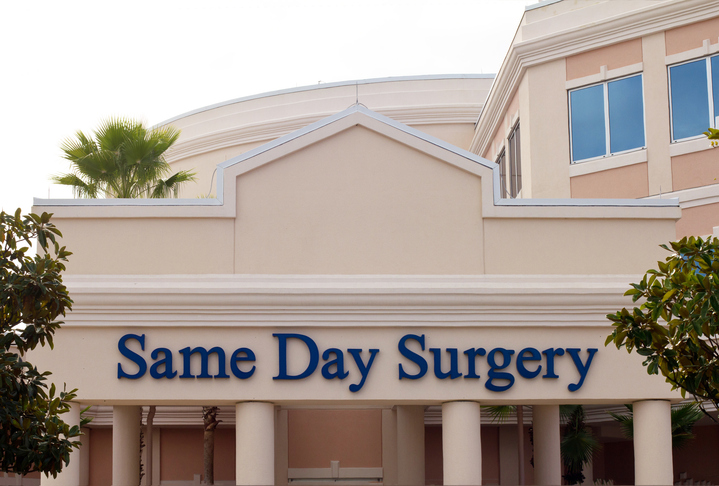
At the center of this migration are Ambulatory Surgery Centers. ASCs are purpose-built outpatient surgical facilities that allow patients to undergo procedures and return home the same day. They operate at meaningfully lower costs than hospital-based surgical suites, which has made them the preferred model for insurers, Medicare administrators, and value-based care frameworks across the country.
The U.S.-based ASC market was valued at over $40 billion in 2023 and is projected to grow at a compound annual growth rate of approximately 6% through 2030. New federal reimbursement rules taking effect in 2026 expand the list of procedures approved for ASC settings, extending the runway for growth even further.
What the ASC Expansion Means for Real Estate Investors
For capital allocators active in healthcare commercial real estate, ASC growth translates into a specific and evolving set of real estate investment characteristics.
ASCs typically operate under long-term net leases, often 15 years or more, with rent escalation provisions built in. EBITDAR coverage ratios of 2.0x or greater are standard underwriting requirements, providing a meaningful buffer between operator performance and lease obligations. The specialized nature of the buildout, which can exceed $500 per square foot in surgical infrastructure, makes tenant relocation economically prohibitive and strengthens renewal probability considerably.
Suburban markets have emerged as the primary growth corridor for new ASC development, driven by favorable demographics, lower land and construction costs relative to urban cores, and patient preference for accessible, low-congestion care environments. Retail conversion and adaptive reuse are also creating new acquisition and development entry points, as vacant retail and flex space is repositioned into surgical facilities at lower cost than ground-up development.
Investors should also note the role of Certificate of Need (CON) laws in approximately 35 states. In CON-regulated markets, regulatory barriers to new supply provide meaningful downside protection for existing ASC assets, a structural characteristic that supports premium valuations and long-term occupancy.
The cap rate spread between ASCs and traditional MOBs has narrowed considerably as institutional capital has moved into the sector. Healthcare REITs, private equity platforms, and family offices are actively acquiring purpose-built ASC assets in suburban corridors, drawn by the combination of long-term lease stability, essential-service tenancy, and favorable demographic tailwinds.
Navigating Healthcare CRE Requires More Than Market Awareness
Healthcare commercial real estate rewards investors who understand not just the macro conditions, but the local market dynamics, tenant profiles, and regulatory environments that define asset performance. In a sector where occupancy is tight, new supply is limited, and specialized tenants drive long-term value, access to relationships and market intelligence matters as much as capital.
SVN® Advisors operating within an SVN Healthcare specialty practice bring both local expertise and the full reach of the SVN® Shared Value Network® to healthcare real estate transactions. The collaborative model that defines SVN, built on open sharing of listings, market data, and deal opportunities across 200+ offices nationwide, gives investors and healthcare operators exposure to opportunities that a siloed brokerage model simply cannot match.
For investors evaluating healthcare commercial real estate in 2026, the conditions are as favorable as they have been in years. The Advisors at SVN are ready to help identify, evaluate, and execute on those opportunities. Connect with an SVN Advisor today.
Key Takeaways
Healthcare commercial real estate enters 2026 with occupancy at decade-highs, supply at decade-lows, and ambulatory surgery centers driving the sector’s most compelling growth story.
- ASC market growth is structural, not cyclical. Expanding Medicare reimbursement, private equity investment, and a surge in outpatient revenue since 2020 are reshaping where surgical care is delivered and what real estate supports it.
- ASCs offer investors long-term net leases, high tenant improvement costs that discourage relocation, and in CON-regulated states, meaningful barriers to competitive new supply.
- Suburban markets are the leading edge of ASC expansion, with retail conversion and adaptive reuse creating additional entry points for investment beyond ground-up development.