

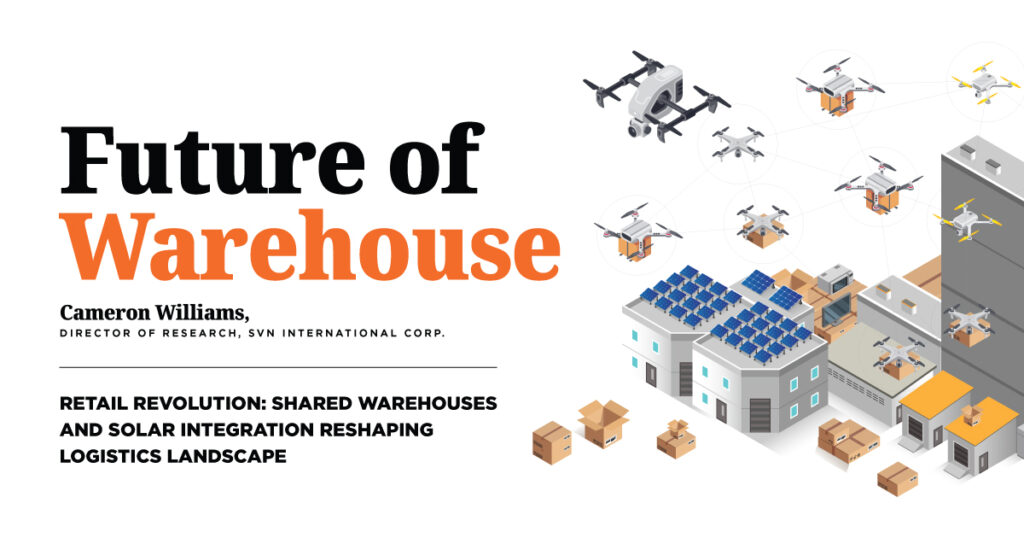
By Cameron Williams, Director of Research, SVN International Corp.
The industrial real estate sector is a dynamic asset class undergoing a multitude of transformative changes. By 2025, online retail is projected to account for a quarter of total purchases, driving the rise of direct-to-consumer (DTC) brands and the demand for expedited shipping. This has prompted smaller brands to spur the development of shared logistics facilities, offering warehousing and logistical services to meet this growing need.
Key Takeaways
The future of warehouse real estate and operations is being reshaped by e‑commerce growth, shared logistics models, and sustainability innovations — trends that are prompting investors, occupiers, and landlords to rethink how warehouse space is used and valued.
What’s shaping warehouse evolution:
- Rising demand from e‑commerce and DTC brands is fueling new types of warehouse uses and shared logistics hubs.
- Smaller, flexible facilities are emerging to support expedited shipping and regional fulfillment needs.
- Technology and sustainability trends, from solar integration and data analytics to automation and real‑time tracking, will continue to improve efficiency and operational performance.
These shifts point to warehouse real estate that’s not just bigger, but smarter and more adaptive.